Not only the taxi, auto, rickshaw or bus rides.But other encounters. Every kind, really. A look at life. This side, the other side. Dark, soulful, comic, tragic but always happening-throwing up experiences and dialogue. I was captain of House Encounter in school,some things do carry on...
Based on Plutarch’s paradox of whether a ship whose parts
have been changed can be considered to be the same ship as it was before, the
film, Ship of Theseus, by Anand Gandhi, explores this issue through three lives
and their stories come together in the end for these people have received their
new parts through one donor, a hobbyist cave explorer whose film they come to
see at a private screening and where they meet each other as separate
individuals united by the fact that each of them has a part of one man, now a
part of them.
The first story is of a young Egyptian blind photographer, Aliya Kamal, who takes black and white photographs
which have a unique unexplained element to them. Her work is gaining popularity.
In an interview, she says that she has no set limits or boundaries in what she
wants to do, and so on the surface one finds her to be comfortable in her
blindness. At the same time she has an argument with her boyfriend where she
wishes to destroy anything that happens ‘accidentally’, any photograph over
which she has ‘no control’. So she is grappling with the fact that her
blindness happened accidentally and she could not control that aspect of her
life and this reflects in her behavior.
However, she gets a cornea transplant that restores her
eyesight. She is now back in the world of being able to see. The return of her
vision makes her lose her photographic vision. She finds that her work has lost
that special something which her blindness had gifted her. She is overwhelmed
by the sights that surround her.
The second story is of a monk called Maitreya who is an
animal rights activist and when threatened with liver cirrhosis, chooses to die
slowly rather than take treatment, since the drugs have all been cleared and
manufactured after being tested on animals. There are interesting questions
posed in this segment through the dialogues between Maitreya and Charvaka ( a
young follower and admirer) on life, death, existence, humanity, permanence and
impermanence etc. The heaviness of the matter under discussion is lightened by
the jokes cracked by Charvaka as they talk. When Maitreya is diagnosed with
cirrhosis, despite everyone’s attempts to make him change his mind, he is shown
choosing the path of hunger and fasting to death. It is only at the last moment
that he changes his mind and asks his attendant monk to call for the doctor.
Thus we see that the love for one’s life and mortal flesh puts paid to all
idealism and heroic endeavours and the quest for immortality, despite Maitreya
trying very hard to adhere to what he stands for.
The last story is of Navin, a stockbroker, who justifies to
his grandmother the fact that his interest in making money and what she calls
his ‘limited world’, is not to be scoffed at. During his stay at the hospital
to take care of his grandmother who has had an accident and broken her leg, he
hears a woman wailing and discovers that a common bricklayer’s kidney has been
removed while he underwent an appendicitis operation. At first, since he has
had a kidney transplant, he believes that he has the bricklayer Shankar’s
kidney, but his fears are put to rest.
His investigations lead him to a person in Stockholm who has
received Shankar’s ‘stolen’ kidney. The man agrees to arrange for a new kidney
for Shankar and take care of everything, but Navin finds that instead of this,
the foreigner sends six and a half lakhs as payment to Shankar. Shankar is
ecstatic, and refuses to listen to Navin’s attempts to tell him that he can get
his kidney back. Navin’s grandmother tells him that it is enough that he has
tried to make a difference to someone else’s life. The dismal life that poverty
brings is shown without any filters as Navin and his friend climb narrow,
slippery, filth covered staircase after another to try and reach the place that
Shankar calls home ). The film exposes without deceit the behavior of Indians
and the Indian set up, the way the nurses are unhelpful and unavailable even in
the best of hospitals, the way Navin’s friend wipes his sweaty face on a cloth
hung out for washing. the wiping of Navins hands on his pants after he has
washed them; these little touches add to the film’s authenticity.
Though the scenes move slowly and sometimes drag (e.g. the speaking
of the Stockholm man in his own language and then the translation by Ajay, the
stockbroker Navin’s friend), the film shows how the trafficking in organs is a
matter of grave concern today, and also how losing or getting and organ has
repercussions both for the giver and the receiver. The photography is often
breath-taking. The actors have been well chosen. Naveen Kabi is fantastic in
his role. So is Suhel Shah, who plays his role as a young stockbroker with
elan. Since the language is often Hinglish, and in the first story and in the
last story, some spoken parts are neither English nor Hindi, it is good that
the movie is sub- titled.
There is a particular fragrance that always brings back
memories of my childhood days in Kolkata. My mother was extremely house proud
and she would decorate the house with ferns and flowers every day. This was
possible in a Kolkata flat because a flower seller climbed all the way up to
our floor every morning to bring the flowers to our doorstep. There was no
garden of flowers outside the block of flats, just some huge trees in the
corners of the plot that provided shade.
My mother had studied Ikebana so several of the arrangements
were of the ‘designer’ type. She had spiked iron holders in vases to hold the
arrangements. Ferns and plants often curled their tops into loops and other
forms to suit the requirements of this demanding style of flower arrangement.
But there was one area where simplicity reigned. In the
hallway, there hung an oval mirror with a thick decorative brass frame. Just below
this mirror there hung a long, polished wooden ledge. It was held by thick
decorative brass chains on either side which were attached to the wall. In the
centre of this wooden ledge and aligned with the mirror at the back, my mother
placed a huge cut glass vase of Rajnigandhas every day. It reflected in all its
beauty in the mirror. But I did not care for how beautiful it looked at that
time.
All I cared for was the fragrance that assailed my nostrils
when I entered the hallway. I would be hot, sweaty, smelly and tired from my
day at school. The cool hallway and the smell of Rajnigandha was all that
mattered to me then. The tall white flowers that filled the vase beckoned me. I
would run up to the vase and breathe in deeply; and all balance would be
restored for the time being.
Then of course, mother would be standing there, a glass of
chilled lemonade in her hands. The smell of freshly squeezed lemon and the
fragrance of Rajnigandha… that is what I remember with nostalgia. My mother’s
hands smelled of lemon too as she placed the glass to my lips.
When I decorate my
home with flowers, I place huge vases of Rajnigandha all over the place, and
that works for me. This is a simple
thing for me to do, it requires no art. But it reminds me of those hot
afternoons filled with fragrance. All I have to do is make myself some chilled
lemonade and stand in front of a vase of these beautiful white flowers. I am
transported back to those carefree days when most things revolved around
homework, hopscotch and a home filled with food, fun and flowers.
At the times when these real flowers with their particular perfume
are not available for me, I wish I could spray the fragrance of Rajnigandha in
my home. It would fill me with so much happiness and instant nostalgia.
I
have this dream of visiting London with my family. It is not that I have not travelled,
but somehow London has, so far, escaped my radar. So this is one place that I
really wish to go to for my next holiday.
Why
London, one may ask, for isn’t it just another prominent city and just another
capital of a country? What does it have to offer that other cities don’t? It is definitely not off the beaten track,
being a city that almost anyone with a vestige of a colonial hangover would
want to visit.
Maybe
I have that, the colonial hangover, can’t say, but London it has to be. What drives
me to wish to go to London now…well, let’s see.
My
first English Reader made me read about a Jack instead of a Ram “Run, Jack,
run,” it went, and then, “Can Jack run?”
The Nursery Rhymes I learnt went something like this, “ Jack and Jill went up
the hill to fetch a pail of water…”
I
crossed hands with a friend to go round and round during the lunch break to
sing, ”Ringa-ringa roses, a pocket full of posies…” of course, in those days I
said something like ‘poses’ instead of posies and never for once wondered what
that might mean! It was enough to go round and round with our school skirts
flying behind us and sing of roses and poses.
And
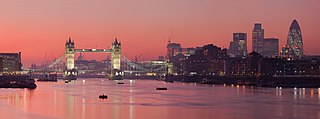
I sang also of how London Bridge was falling down. There was no song that I
sung about the bridge over the River Hooghly, though I stayed in Kolkata at the
time.
So
of course, the fascination for Jack and Jill, English roses and the London
Bridge began very early in my life. I am sure I will look at the people in
London on my trip there and perhaps say hello to several Jacks and Jills. I
shall look at the London Bridge and feel happy to see that it has not yet
fallen despite my loud song about it.
As
an afterthought, I also read Jack and the Beanstalk as a fairy tale, so that is
yet another Jack to explore in London.
Then
what happened in my reading life? I began to read Enid Blyton’s stories, and
she was definitely a Londoner. I plan to visit her home in East Dulwich and revisit my
memories of Noddy, the Five Find Outers and Dog, Mallory Towers and so many
other books that she filled my childhood days with.
I
then progressed to read the Complete Works of Sherlock Holmes. So naturally I would go to the famous address in London, 221b Baker Street. This it seems, is now a museum, the interior having been created from the stories. I will look at Holmes’ hat, magnifying glass, violin, phials and his famous pipe and imagine him standing right there next to me.
P.
G. Wodehouse created a fictitious world around the real London of the 1930s. He
filled my reading days with charm and laughter. I would love to take the ‘"What Ho Jeeves!"The London of P.G. Wodehousewalk” and relive the days of Bertie
Wooster and Jeeves.
It
was during my teenage years that I read T.S. Eliot’s poem where the lines on
the yellow fog (of London, where else?) have stayed with me:
“The yellow fog that rubs its back upon the window-panes
The yellow smoke that rubs its muzzle on the window-panes
Licked its tongue into the corners of the evening…”
―T.S. Eliot,The Love Song of J. Alfred Prufrock
Without
a doubt, T.S. Eliot, though born an American, considered himself much of an
Englishman for he took British citizenship in 1927. So the fascination with all
things English is not limited to people like me of the British colonized
countries alone.
The
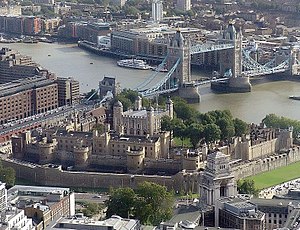
Tower of London is also on my list of visits. I saw the movie Anne of a
Thousand Days and fell in love with Genevieve Bujold’s portrayal of Anne Boleyn.
I also became fascinated by the history of the Tudors. ‘The ghost ofAnne Boleyn,
beheaded in 1536 for treason againstHenry VIII,
allegedly haunts the chapel of St Peter ad Vincula, where she is buried, and
has been said to walk around the White Tower carrying her head under her arm.’ (http://en.wikipedia.org/wiki/Tower_of_London)
Wow. Now that’s something.
Then
there is Shakespeare. So the Globe Theatre in London warrants a visit. So much
to see and do in London.
I
am a touristy type of person too, so of course I shall go to the Buckingham
Palace and Westminster Abbey, and admire the Big Ben.
The
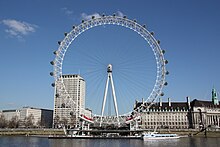
London Eye is a giant Ferris wheel on the South Bank of the River Thames
in London, England. It is something contemporary and
excites my interest. So you can be assured that I am
not only going on a nostalgic trip here.
And
finally, I and my family will enjoy a bracing walk along the River Thames and
follow it with a warm drink in a
Riverside pub somewhere along the way.
I remember the
bat-winged lizard birds,
The Age of Ice
and the mammoth herds,
And the giant
tigers that stalked them down
Through
Regent’s Park intoCamdenTown.
― Rudyard Kipling, The River’s Tale, 1911, (on the
Thames)
I
may, with my family, even laze in the sun a while, as is commonly done in Hyde Park.
This
holiday would be full of fun, adventure and history, and also bring to life so
much I have read and dreamt about. It would be a dream holiday, and my family,
which is equally besotted by London and all that it has to offer, will have the
time of its life when we holiday there.
I
am a writer and a street-side photographer, so I cannot help myself. On my
visit, I would write on what I see, click images, and take back memories of a
city that I have only read about for a long time now.
So London, here I come.
*****
This blogpost is written for the #HappyTravellers Contest of http://www.yatra.com
When I first published a piece of fiction, and it was with an international publication, my father, who was alive then and whose critical appreciation I always looked for, read my story and smiled. “I like it very much. I am so proud of you.” His words were music to my ears.
“How much did you receive for this story?” was his next question.
“Nothing, Dad, but it is big thing just to be published here,” I replied, surprised at his question.
“You express yourself very well, but this field obviously has no money. You should look at something else.”
I thought about it, my father did have my best interests at heart.
But I knew myself, my mind and my passion. I had to write. They say the path chooses you. I say that you also have to choose your path. I could have done anything else, but I stuck to writing. I knew that writing fuelled my spirit. That with writing I came alive.
Over the years I wrote poems, articles, essays, short stories, a novel, and my work was published in India and abroad. I won awards and recognition.
I have a long way to go. But I know that whenever my fingers fly on my laptop and the words begin to form on the screen, I am in the right place, creating my next piece of work.
I would like to believe that a woman ‘As Beautiful as her Work’, is me. I am as beautiful as my writing and as confident as Megha is with her presentation. I am sure, just like she is, that whatever I present will hold the reader’s attention, for my work is an expression of myself.
Megha knows the worth of her work. I know this too; my writing scintillates with my passion and illuminates my true beauty. I am a Mia woman. This blogpost is my entry for the 'Tanishq’s Mia blog contest in association with Ripple Links on the topic “As Beautiful As Your Work”.
What your ancestors give to you may be just that certain hip in your walk, that certain slip in your tongue or maybe just the way you look at things or feel a certain spring the unquantifiable parts of you that show in your smile as you skate on the edge of things oh yes, don't say that you are just you, while that may be true there have been others that make you break you. (C) Abha Iyengar, 1st July 2013 (Ruminations in this Kickstarter Month)